
Metabolic syndrome is predicted to impact over one in three Australian adults – increasing the risk of development of a range of chronic conditions such as type 2 diabetes, heart disease, stroke, fatty liver disease, chronic kidney disease, depression and even some cancers. It is often poorly recognised, and most sufferers are unaware that they are at increased risk.
Metabolic syndrome can be diagnosed if you have at least 3 of the 5 following components:
- Excess weight around the abdomen — waist circumference above 102 cm in men, 88 cm in women (in Caucasian populations)
- High blood pressure — at or above 130/85 mmHg, or already on blood pressure medication
- Elevated fasting blood sugar — at or above 5.6 mmol/L, or on glucose-lowering medication
- High triglycerides — at or above 1.7 mmol/L (a type of fat in the blood)
- Low HDL (“good”) cholesterol — below 1.0 mmol/L in men, below 1.3 mmol/L in women
What causes metabolic syndrome?
Metabolic syndrome doesn’t have a single cause. It develops over time, usually as a result of the combined effects of:
- Weight gain around the abdomen — fat stored deep in the belly (around the organs, rather than just under the skin) is metabolically active and disrupts the body’s normal hormonal balance
- A diet high in processed foods and added sugar — which drives fat storage and blood sugar dysregulation
- Poor physical activity
- Poor sleep — even short-term sleep deprivation raises blood sugar, increases appetite hormones, and promotes fat storage around the abdomen
- Chronic stress — ongoing stress elevates cortisol, which encourages abdominal fat accumulation and makes blood sugar harder to regulate
- A family history — genetics do play a role, but they are not the whole story. Lifestyle factors can impact on the way genes are expressed via a mechanism called epigenetics. This means that the same genes can lead to very different outcomes depending on how you live
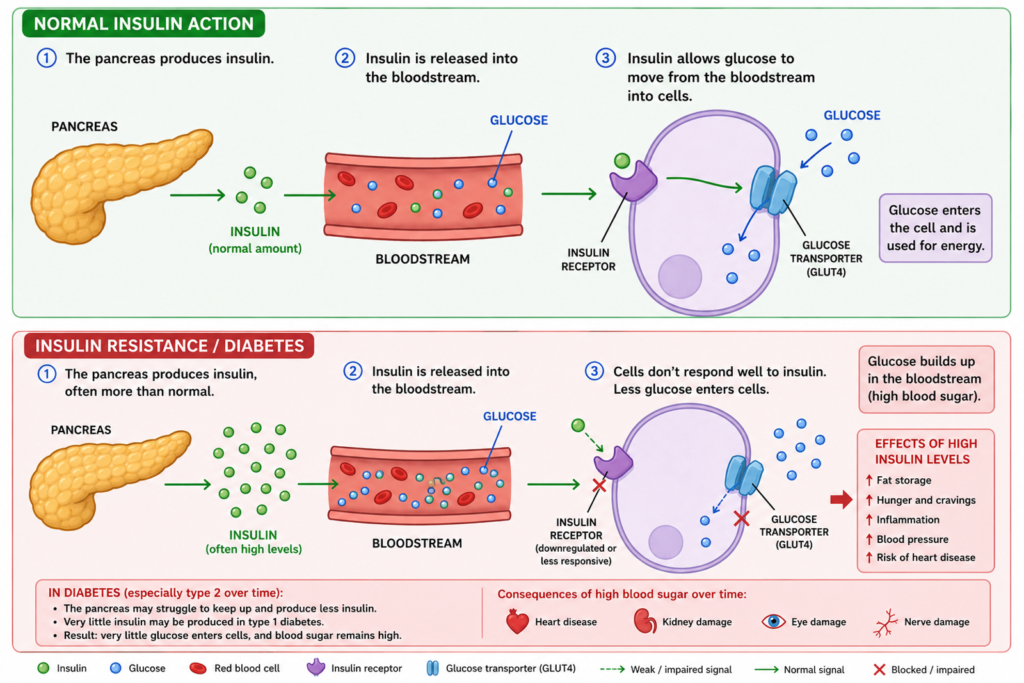
Metabolic syndrome is closely linked with insulin resistance, where the cells in your body don’t respond adequately to insulin and thus the pancreas needs to produce higher quantities of insulin to keep blood sugar levels stable. These elevated insulin levels can have a range of detrimental effects in the body including increase in adipose tissue (fat cells), metabolic associated fatty liver disease, elevated cholesterol and chronic inflammation. If not managed, this insulin resistance may result in the development of type 2 diabetes.
The diagram below demonstartes normal insulin function in comparison to insulin resistance (and diabetes).
What Can You Do About It?
This is where lifestyle medicine can really impact – because the evidence is clear that metabolic syndrome responds powerfully to lifestyle change.
Here’s what the evidence supports:
Move More — and in Different Ways
Both aerobic exercise (think brisk walking, cycling, swimming, dancing) and resistance training (weights, Pilates, bodyweight exercises) independently improve every component of metabolic syndrome. Research consistently shows that even 150 minutes of moderate activity per week — about 30 minutes, five days — produces meaningful, measurable improvements in blood pressure, blood sugar, and waist circumference. The key is consistency over intensity, especially when you’re starting out. Start with small and go, slow. If you aren’t sure where to start, it can often be useful to think about the types of physical activity you used to enjoy and start there!
It is also important to reduce prolonged sitting and immobilisation throughout the day. Every hour, can you stand up and go for a short walk? Or do 10 squats? or a few bicep curls?
Eat in a Way That Nourishes, Rather Than Restricts
You don’t need a complicated diet plan. The most consistently evidence-backed eating pattern for metabolic health is the mediterranean diet – rich in vegetables, fruits, legumes, whole grains, nuts, and olive oil. This means eating mostly whole foods, minimising ultra-processed foods and added sugars.
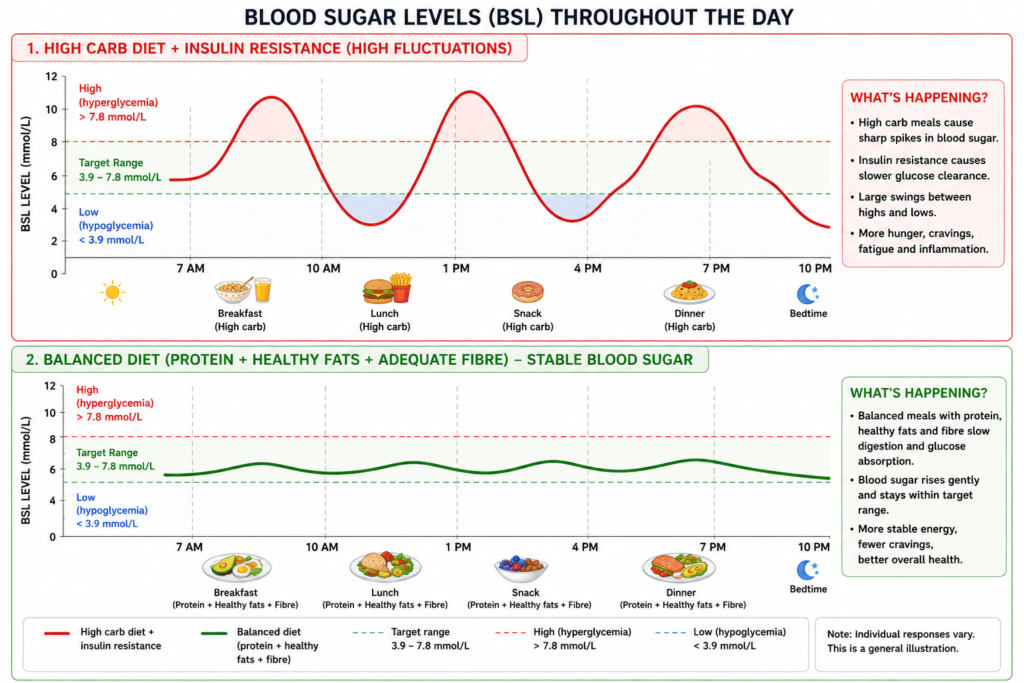
It is important to try and balance meals, by having protein, healthy fats and fibre with each meal, rather than having meals that are just rich in carbohydrates. This helps to stabilise blood sugar (and thus insulin) levels, improve energy and reduce cravings.
Prioritise Sleep
Sleep is not a luxury — it’s a metabolic necessity. Poor sleep (both too little and poor quality) raises blood sugar, increases hunger hormones, promotes fat storage, impacts dietary choices and worsens every component of metabolic syndrome. Aiming for 7–9 hours of quality sleep is one of the most impactful things you can do for your metabolic health.
Address Stress
Chronic, unmanaged stress has real physiological consequences for metabolic health. Finding sustainable ways to manage your stress response — whether that’s through exercise, time in nature, connection with others, mindfulness or breathing exercises.
Weight loss
Modest weight loss of 5–10% of body weight leads to clinically meaningful improvements across all five components of metabolic syndrome.
You don’t need to change everything all at once. A consistent walk after dinner, more vegetables on the plate, an earlier bedtime — these things all add up.
The Bottom Line
Metabolic syndrome is extremely common in Australia, often goes unrecognised and can increase the risk of the development of numerous chronic diseases which impact a health trajectory and health-span.
But all hope is not lost, with consistent lifestyle changes, metabolic disease can be reversed with significant improvement in overall health and wellbeing.
References:
- Australian Institute of Health and Welfare (AIHW). Diabetes: Australian Facts. 2024. aihw.gov.au
- Chan BS et al. Multi-modal interventions outperform nutritional or exercise interventions alone in reversing metabolic syndrome: a systematic review and network meta-analysis. PubMed, March 2025.